
Safe excavation isn’t just good practice — it’s essential. Even experienced operators know that beneath the surface lies a complex network of utilities that can pose significant risks to workers, assets, and project timelines. A recent project at QE2 Hospital in Nedlands, WA serves as an important reminder of why BYDA’s free plan request service and following the 5Ps of Safe Excavation is essential for every project.
When the Ground Tells a Different Story
A contractor was initially engaged to auger ten holes for new light-pole footings, each 600 mm wide and 1.3 m deep. It looked like a straightforward job. But after lodging a BYDA enquiry and reviewing the plans, the team identified several concerns. On-site checks raised more questions, especially given the large number of mature trees and roots surrounding the work area.
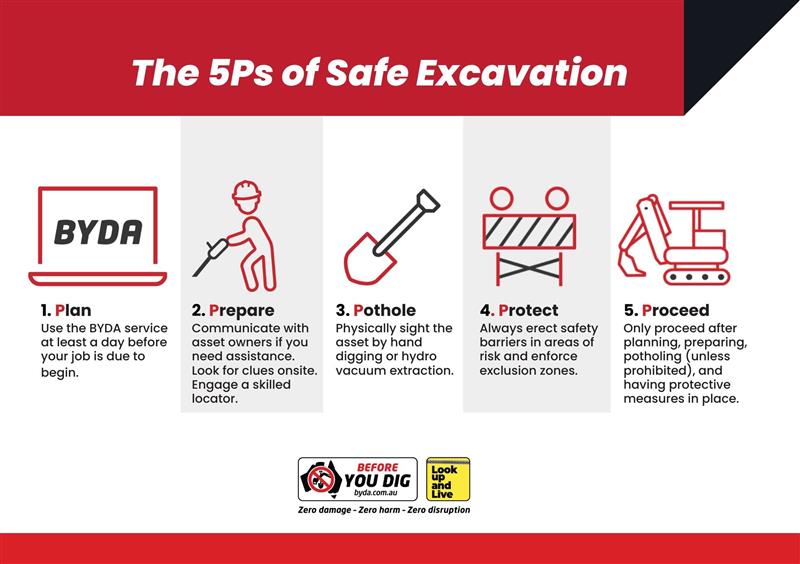
Rather than push ahead with mechanical augering, the crew stepped back and reviewed the job according to the 5Ps:
Plan: A BYDA enquiry was lodged to understand what utilities may be present in the area.
Prepare: The team studied plans, assessed risks, and conducted additional on-site checks.
Pothole: Test holes confirmed there could be unmapped services.
Protect: A safer, non-destructive approach was needed.
Proceed: Only once risks were understood and mitigated.
This careful approach paid off. When excavation began using a vacuum trailer, several underground services were uncovered, including ones not shown on any plans and not detected during scanning. Had the team used an auger, these services would likely have been damaged, leading to outages, costly repairs, and significant safety risks.
The Safe Alternative: Vacuum Excavation with Miniquip
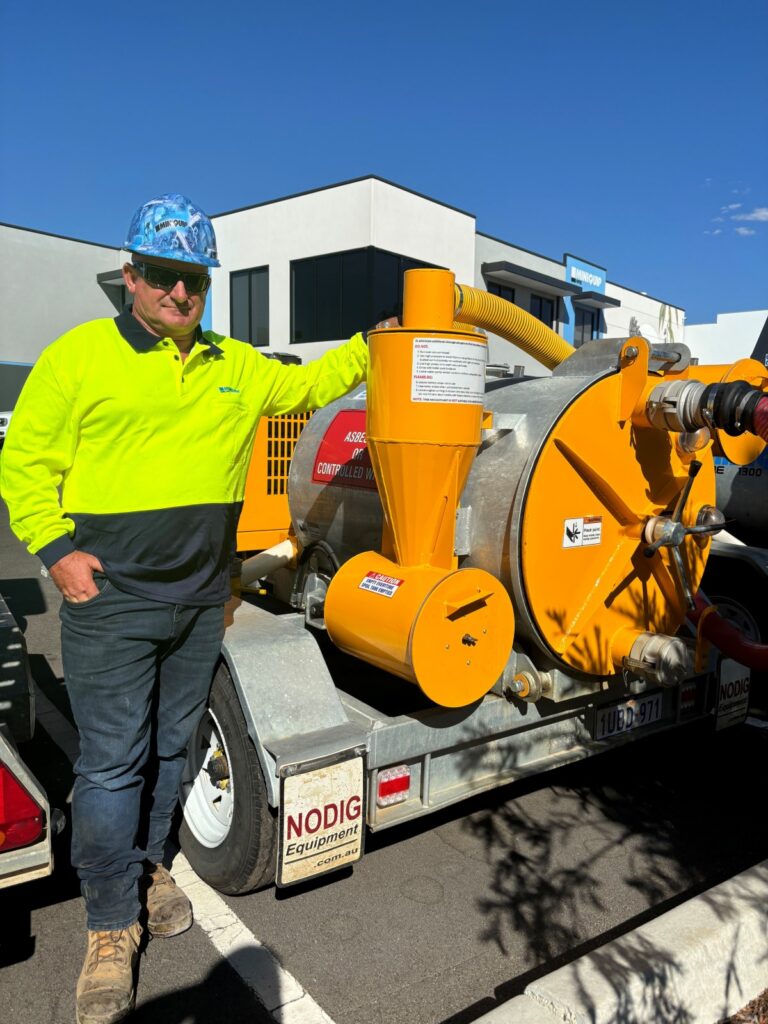
To carry out the work safely, the contractor hired a vacuum excavation trailer from Miniquip, a long-standing WA provider of compact earthmoving equipment and Perth’s largest fleet of vacuum excavation trailers for dry hire.
Miniquip’s vac trailer allowed the team to expose buried assets carefully and accurately, without damaging them. The approach not only prevented potential service strikes and injury but also avoided project delays and additional costs.
A Reminder for the Industry
This case demonstrates how ground conditions can change over time, and not all assets are recorded with the BYDA service. Tree roots, soil movement, and legacy infrastructure can conceal risks.
Obtaining BYDA plans is just the first step. Following the 5Ps of safe excavation minimises the risk of injury to workers and utility damage.
Work Smarter. Dig Safer.
Lodge a free BYDA enquiry before starting any excavation or digging project.
- Review all plans and safety information.
- Follow asset owner’s instructions when working near their assets.
- Protect your team, your project, and essential services.
For more information or to lodge your next enquiry, visit www.byda.com.au.